

Gym Membership vs. Home Workouts: The Real Cost of Progress
Is a home gym really cheaper than a gym membership? It’s the ultimate "math vs. motivation" debate.
As we move through 2026, the fitness landscape has shifted toward hybrid models. While the "no commute" life is tempting, the true cost of progress isn't just about the dollars—it's about the results you actually achieve.
1. The "Hidden" Math of Home Gyms
At first glance, a home gym looks like a one-time investment. But for a serious trainee, the startup costs in 2026 are high.
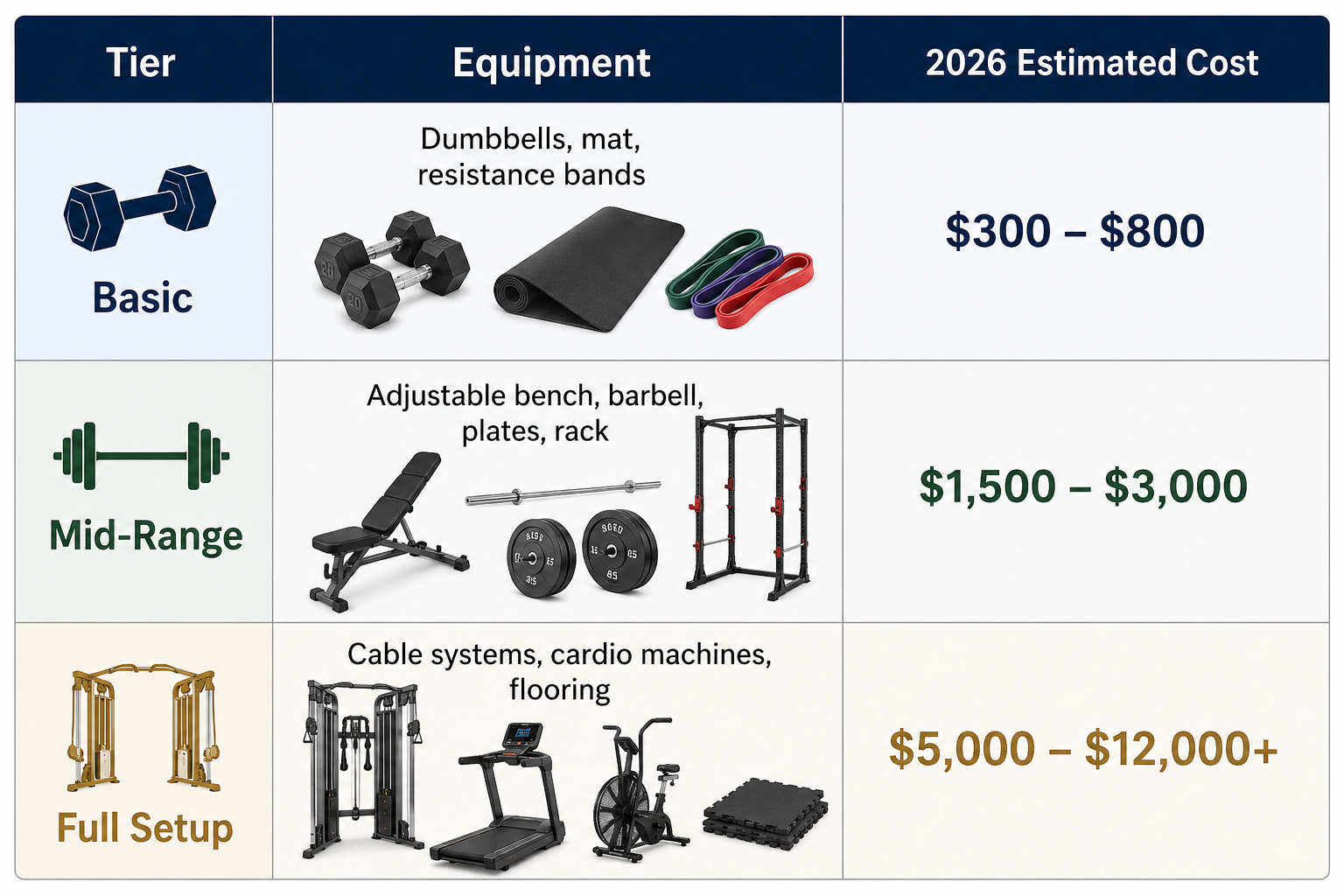
The "Recoup" Reality: It takes the average user roughly 2 to 3 years of consistent training to "break even" compared to a standard commercial gym membership.
The Costs Nobody Mentions:
Flooring & Ventilation: Proper rubber flooring adds $150–$500, and basement/garage ventilation can add another $300 to the bill.
Maintenance & Tech: In 2026, smart equipment often requires a $40–$50/month subscription to keep its screens and tracking features functional. If the machine breaks after the warranty, the repair cost is 100% yours.
Space Constraints: 60% of urban dwellers cite lack of space as their primary barrier to home fitness.
2. Why Gym Memberships Are Your "Progress Insurance."
A gym membership isn't just a "rental" for equipment; it’s an investment in a high-performance environment.
Access to "Heavy-Duty" Variety
Most home gyms lack the specialized machines found in a commercial facility, such as leg presses, cable crossovers, or high-end squat racks. Accessing this variety allows you to isolate muscle groups more effectively and avoid the "plateau" that often hits home trainees who only have one set of dumbbells.
The "Community" Factor
Training in isolation is one of the biggest reasons for home-gym "churn." Data show that hybrid members—those who use both digital tools and in-club facilities—stay active 3 months longer on average than those who train exclusively at home.
Accountability: 38% of people cite "mental health" and "fitness progress" as their top motivators—both bolstered by the social energy of a physical gym.
Expert Guidance: Beginners often struggle at home without hands-on instruction to correct form, increasing the risk of injury.
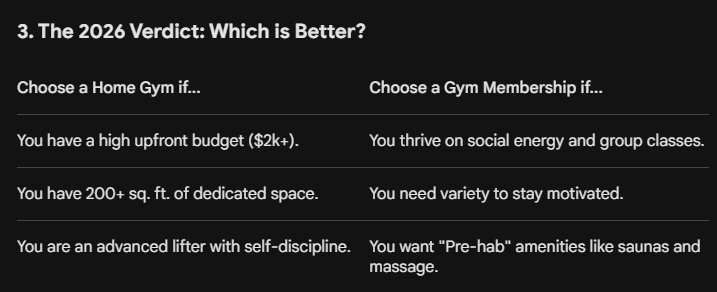
Final Thought: If you find yourself using your home treadmill as a laundry rack, it’s the most expensive equipment you’ve ever bought. Progress happens where you are most consistent. For many, the $30–$50 monthly "investment" in a gym membership pays for itself in the form of a supportive community and professional-grade equipment you could never fit in your garage.